Full vs Half Pedestal Wash Basin: Smart Buying Guide
09 January, 2026
Connect With Our Team

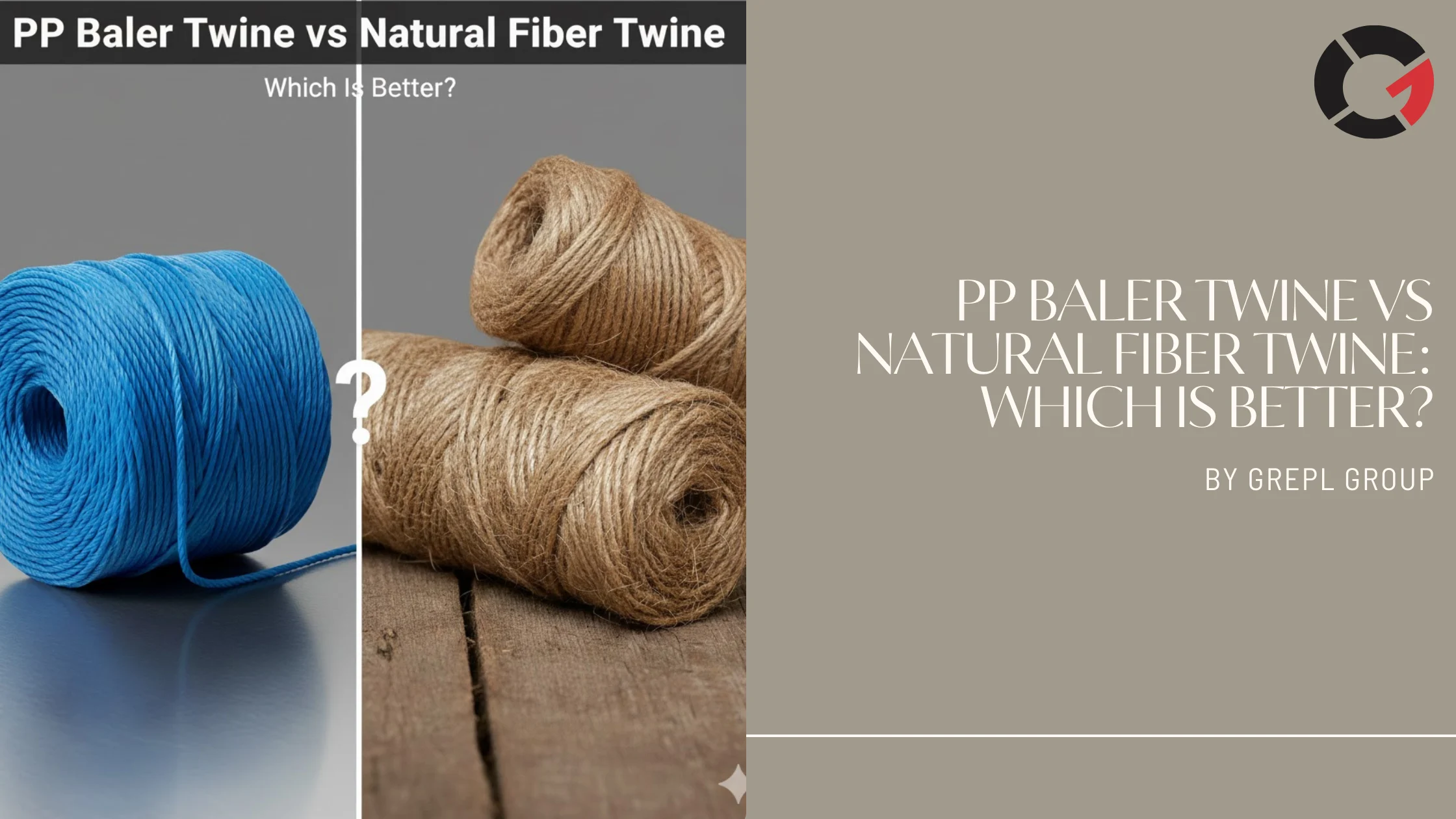
Twine may look simple, but it plays an essential role across multiple industries agriculture, packaging, horticulture, recycling, warehousing, construction, and transportation. From tying hay bales to securing goods in storage, from crop bundling to construction material binding, the quality of twine directly affects safety, efficiency, and durability.
Among all options available today, the two most widely used types are PP baler twine and natural fiber twine. While PP baler twine (polypropylene twine) is valued for its high tensile strength, weather resistance, and compatibility with baling machines, natural fiber twine stands out as a biodegradable, eco friendly twine commonly used for gardening, décor, and light packaging.
This detailed comparison will help you understand which twine is better suited for agriculture, industrial packaging, construction twine applications, and everyday use.
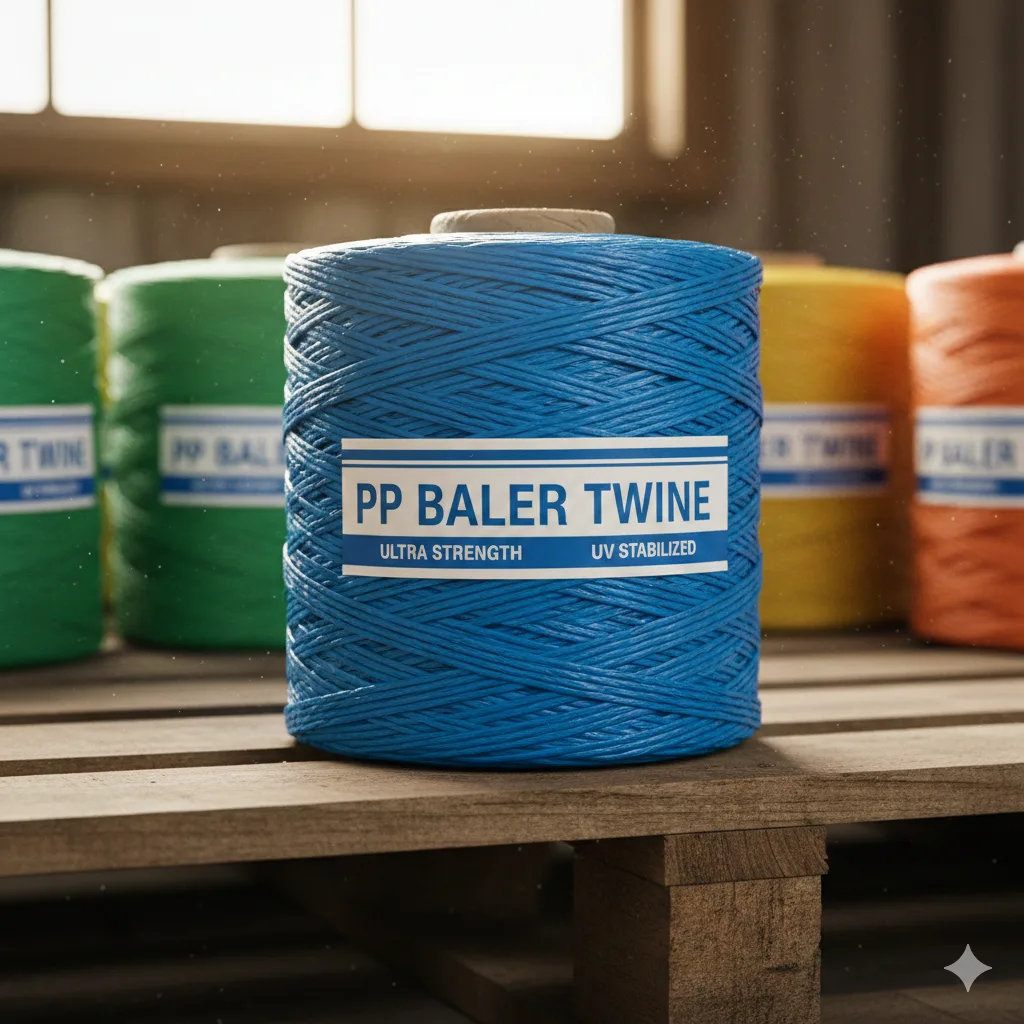
PP baler twine, also known as polypropylene twine, is a synthetic twine made from strong, high-quality plastic fibers. These fibers are extruded, stretched, and twisted to achieve excellent strength and consistency.
From grepl’s product range, PP baler twine is known for:
High tensile strength
Uniform thickness for smooth knotting
UV resistance for outdoor environments
Moisture & chemical resistance
Lightweight and flexible structure
Multiple denier sizes for different load capacities
Breaking strength ranging from 27.5 kgf to 660 kgf
Colors for easy identification
Compatibility with manual and automatic balers
Because of these features, PP baler twine is widely used as agricultural baler twine, hay baler twine, round baler twine, and polypropylene packaging twine across agriculture, recycling, warehousing, and industrial sectors.
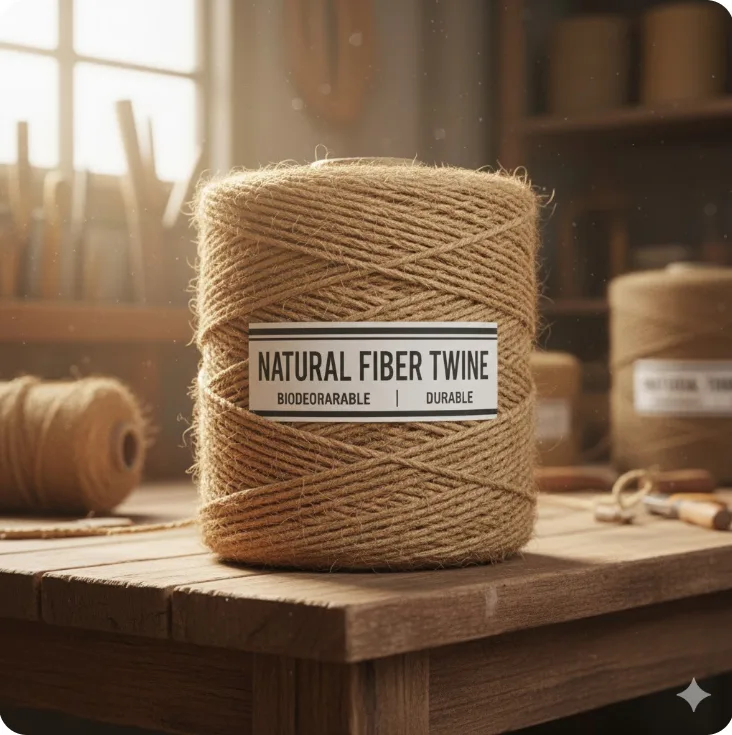
Natural fiber twine includes fibers such as jute, sisal, cotton, and hemp all of which are derived from plants. It naturally decomposes and does not leave behind harmful residues, making it a preferred choice for eco-friendly applications.
Typical qualities include:
100% biodegradable twine
Highly eco-friendly
Chemical-free
Strong natural grip
Rustic and traditional look
Ideal for gardening, décor, plant support, and light packaging
However, natural fiber twine has drawbacks: It absorbs water, weakens under sunlight, molds in humidity, and cannot handle the load capacity required for baling machines, construction, or industrial packaging.
Below is a quick comparison:
| Feature | PP Baler Twine | Natural Fiber Twine |
|---|---|---|
| Material | Polypropylene (synthetic) | Jute, sisal, hemp, cotton |
| Strength | Very high | Moderate |
| Breaking Load | 27.5 – 660 kgf | Limited (often below 50–80 kgf) |
| Weather Resistance | Excellent | Poor to Moderate |
| Moisture Resistance | 100% waterproof | Absorbs water |
| UV Resistance | High | Low |
| Lifespan | Long | Short |
| Eco-Impact | Recyclable | Biodegradable |
| Machine Compatibility | Excellent | Not suitable |
| Cost per Use | Low (long life) | High (frequent replacement) |
| Best Use | Heavy agriculture, construction, packaging | Gardening, décor, light bundling |
In terms of pure strength, PP baler twine is far superior.
Examples from grepl’s specification chart:
5000 denier: 27.5 kgf (light agricultural tying)
120000 denier: 660 kgf (heavy hay baling, industrial packaging)
Natural fiber twine cannot match this level of strength.It:
Breaks under heavy load
Weakens when wet
Frays under pressure
Develops mold in humid conditions
Therefore, for baler machines, heavy crop bundling, construction material binding, industrial packaging, and transport securement, PP baler twine is the clear winner.
Outdoor use exposes twine to sunlight, moisture, chemicals, and microbial activity. In these conditions:
UV resistant twine: Makes it long-lasting in open fields and sunlight.
Weatherproof: Performs consistently in rain, heat, and dust.
Chemical resistant: Safe around fertilizers and farm chemicals.
Stays strong even when wet: No swelling or weakening in moisture.
Does not rot or mold: Suitable for long-term outdoor storage.
Absorbs water: Leads to swelling and faster breakage.
Develops mold/mildew: Occurs in humid climates and rainy seasons.
Weakens in sunlight: UV rays dry and crack natural fibers.
Breaks under extreme outdoor exposure: Short lifespan limits usability.
This makes polypropylene twine the superior choice for farming, recycling, transportation, landscaping, and long-term outdoor usage.
For long-term outdoor usage farming, construction, recycling, forestry, transportation polypropylene twine is unmatched
The eco-friendliness question is often a deciding factor:
Fully biodegradable
Compostable
Made from plants
Chemical-free
Naturally safe for soil & water
Not biodegradable
But 100% recyclable
Longer lifespan reduces waste
Lower replacement reduces environmental burden
If the priority is sustainability for light applications, natural fiber twine wins.For heavy-duty use where replacements cause more waste, PP twine becomes the practical eco-efficient choice.
Light-duty, sustainability-focused applications: Natural Fiber Twine
Heavy-duty use where frequent replacements cause more waste: PP Baler Twine
PP baler twine is the industry standard for farms that rely on baling machines or handle large crop loads.
Where PP Twine Dominates:
Hay baling: handles high compression without snapping.
Silage baling: remains strong in moist, fermented environments.
Crop transport: secure bundling during movement.
Forestry applications: ideal for bundling logs and branches.
Waste handling: robust enough for recycling bundles.
Landscaping bundles: survives prolonged outdoor exposure.
Why farmers prefer it:Its UV resistance, machine compatibility, and load capacity outperform any natural fiber option.Variants such as 20000 baler twine and 40000 baler twine are often preferred for medium and heavy crop loads.
While it cannot support machine baling, it is very useful in garden-level agriculture.
Best Uses:
Plant tying: gentle on delicate stems.
Supporting small crops: perfect for tomatoes, chilies, beans, etc.
Eco-friendly gardening: safe for organic and home farms.
Farming conclusion:
Large farms, machines, heavy crops: PP Baler Twine
Home gardens, small crops, sustainability needs: Natural Fiber Twine
Construction binding
Heavy-duty packaging
Warehouse stock bundling
Textile industry
Transport securement
Long-term load tension
Craft packaging
Gift décor
Low-load retail use
Thus, for industries requiring reliability and safety, PP baler twine easily wins.
Even if the upfront price may be slightly higher, PP baler twine offers strong economic benefits:
Long lifespan: fewer replacements
High durability: less material waste
Ideal for bulk use: reduces per-unit cost
Works with machines: boosts productivity
Perfect for: Agriculture, construction, warehousing, industrial packaging.
Natural fiber twine is initially cheaper, but:
Breaks faster
Absorbs water and weakens
Needs frequent replacement
Not suitable for high-load tasks
Best for: Lightwork, décor, small-scale tasks.
High tensile strength
UV resistance
Waterproof performance
Machine compatibility
Secure heavy loads
Agricultural or industrial durability
Eco-friendly materials
Light-duty usage
Crafting and décor
Gardening and plant support
Rustic and natural aesthetics
grepl’s polypropylene twine is trusted because:
It provides uniform thickness to maintain reliable tension.
It is UV resistant, moistureproof, and chemical resistant.
It comes in multiple denier sizes for different load requirements.
Breaking strength ranges from 27.5 kgf to 660 kgf, suitable for every industry.
Color variations ensure easy machine identification.
It is lightweight, flexible, and cost-effective.
Works perfectly with manual and automatic balers.
grepl twine is used across agriculture, packaging, construction, forestry, and commercial logistics.
Both PP baler twine and natural fiber twine are valuable but their applications differ.
If you need strength, durability, UV protection, weather resistance, and machine compatibility, choose PP baler twine.
If you prioritize sustainability and light-duty usage, choose natural fiber twine.
For industries that demand consistency, performance, and long-term reliability, grepl’s PP baler twine remains the superior choice.
Yes, PP baler twine is much stronger and more durable than natural fiber twine.
Yes, natural fiber twine is fully biodegradable and eco-friendly.
3. Can PP baler twine be used in baling machines?
Yes, PP baler twine is designed for both manual and automatic balers.
PP baler twine performs better outdoors because it is UV-resistant and waterproof.
PP baler twine is more cost-effective long term because it lasts longer and needs fewer replacements.

Whatsapp Chatx
Hi! Click one of our representatives below to chat on WhatsApp or send us email to exports@greplgroup.com
 |
Mr. Milanbhai +91 96871 06588 |
|
Mr. Hirenbhai +91 95373 06588 |